
Protect player learning
Don't let letters, vocabulary, and grammar you haven't learned yet become key clues to the correct answer.

MAJUHAN replaces unexplained repetition and random drills with lessons that help independent learners understand why Korean works the way it does.

PEDAGOGICAL PRINCIPLES
Rather than just checking whether the function works, we also check what beginner learners know first and what errors they encounter.
Don't let letters, vocabulary, and grammar you haven't learned yet become key clues to the correct answer.
Instead of just explaining the rules verbally, we connect Korean example sentences with explanations in the learner's language.
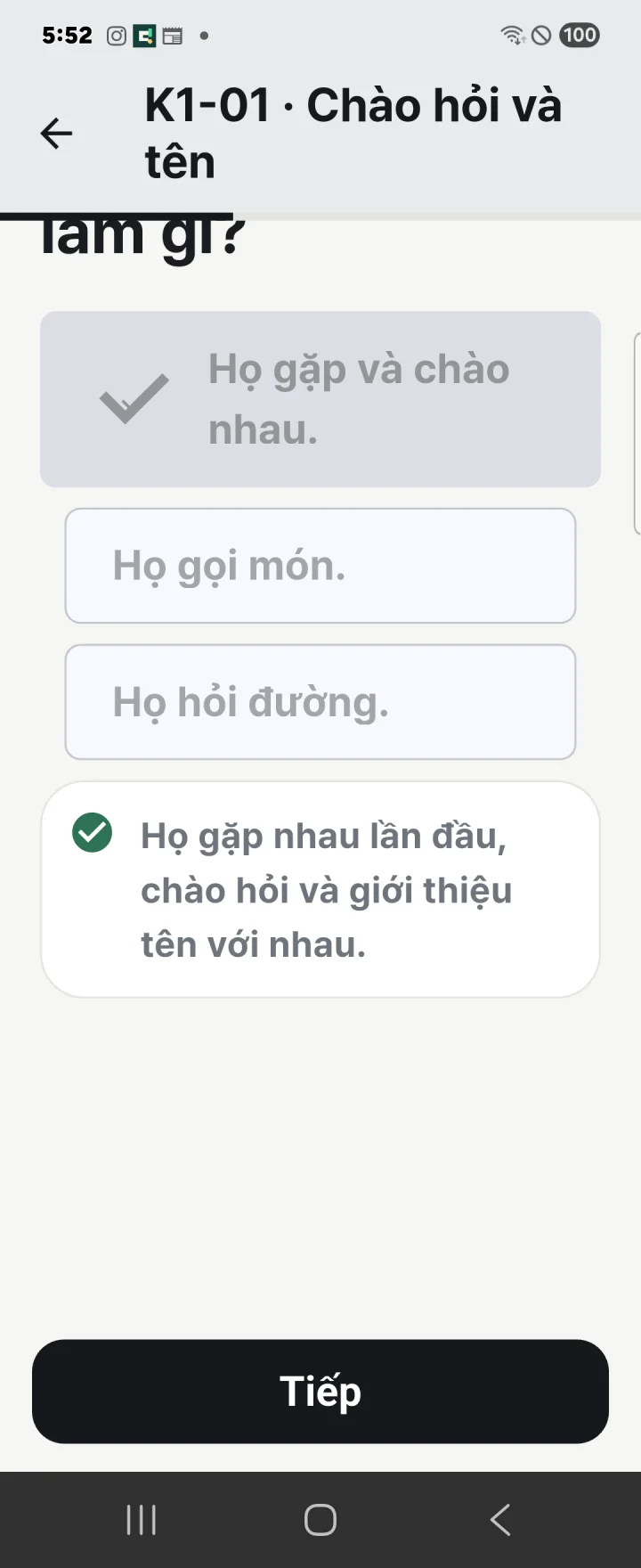
Instead of grammatical noise, errors that actual beginner learners would make are designed as options.
Check not only the grammaticality of a single sentence, but also whether the speaker relationship, location, and purpose of the speech are natural.
LISTEN · NOTICE · USE
Listen to the fixed voice at normal/slow speed, notice the shape, and then use the same function again by selecting, entering, and self-checking. K0 writes directly and saves the learning state on the server.
Normal speeds allow you to rediscover the actual rhythm, while slow speeds remind you of missed sounds and boundaries.
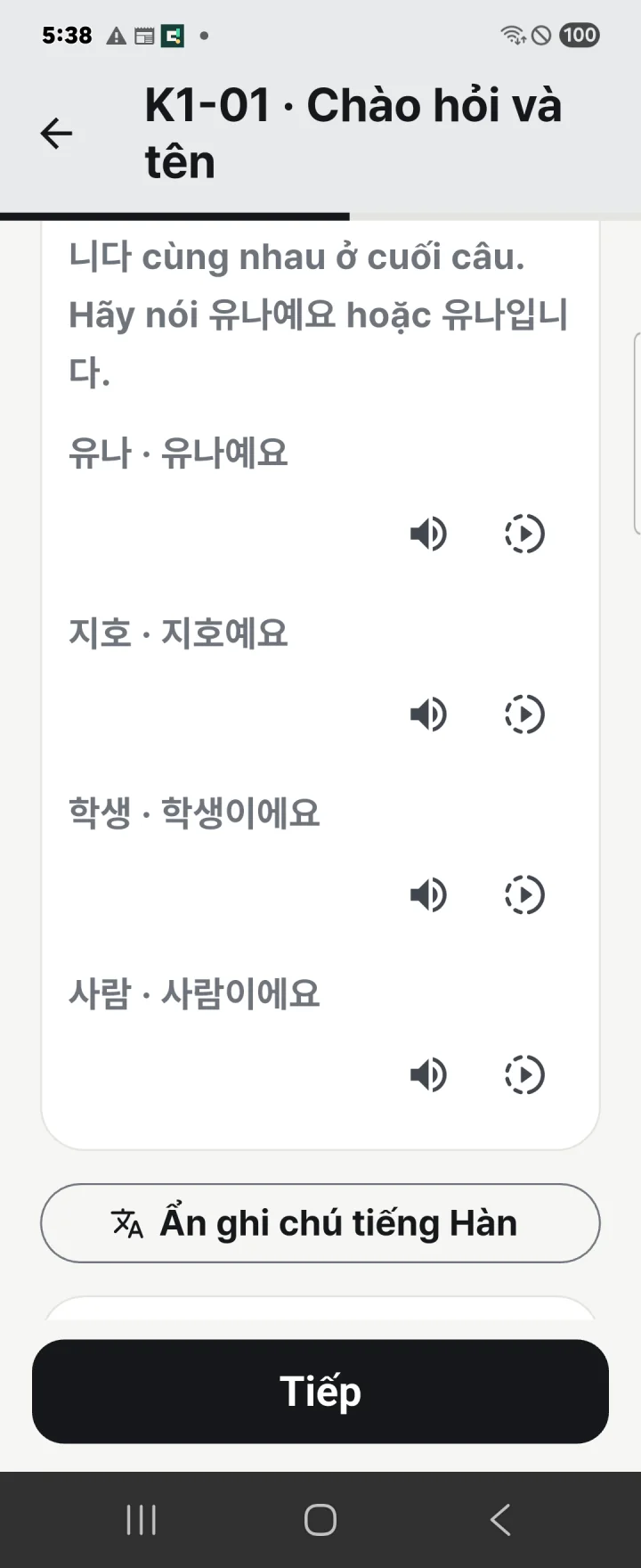
The learning target sentences and options are left in Korean, and only explanations and instructions are provided in the learner's language.
After understanding the representative conversation, perform the same function again by changing the vocabulary and situation.
EVIDENCE, NOT GUESSWORK
We compare related research with the internationally accepted standard Korean language curriculum, Sejong Korean, and university Korean language textbooks, and block unsubstantiated items at the publishing stage.
Link unit objectives, grammar introduction sequence, and vocabulary coverage to external standards.
We do not exaggerate the directly confirmed rationale for individual items and the policy rationale for the entire type as being the same.
If the boundaries between source, correct answer, commentary, incorrect answer, and translation are missing, content verification will not pass.
CONTINUE EXPLORING